Technical foundation
Build technically sound strokes, consistency, balance and quality fundamentals that support long-term development.
Technical fundamentals, footwork, multiball training, serve and receive, tactical understanding, physical conditioning, match preparation, mental strength, and detailed video and performance analysis — designed around the individual athlete, their current level and their long-term goals.
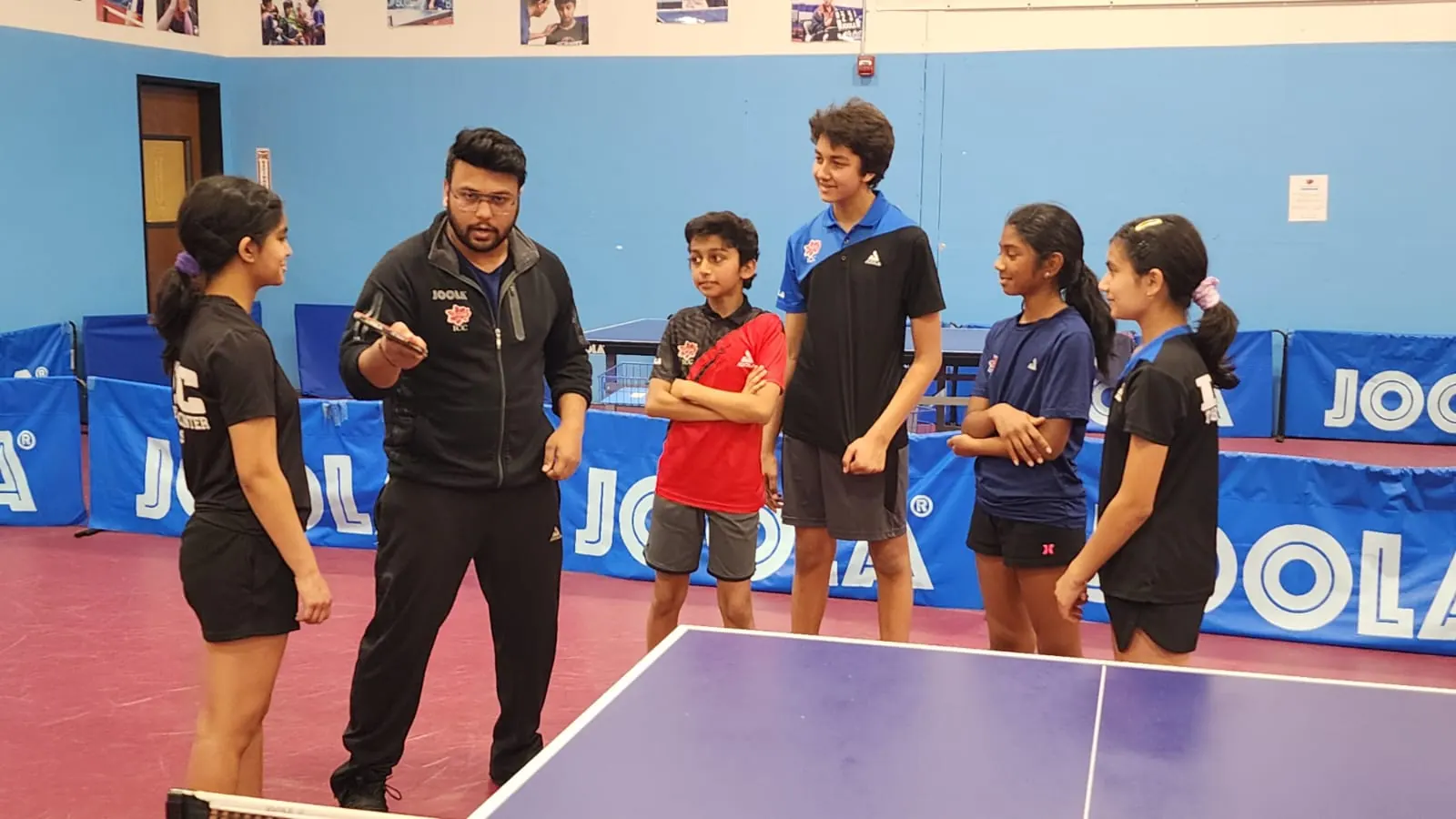
One of Subham’s greatest strengths is his ability to identify potential early and create the right pathway for each athlete. He believes that talent is only the beginning. With the right training environment, discipline, tournament exposure, coaching and consistent guidance, talented young players can transform their potential into performance.
For Subham, coaching is not simply about winning matches or medals. It is about building athletes, developing character, creating confidence, and giving every player a clear pathway toward reaching their highest potential.
Talent gives you the opportunity. The right training, discipline and pathway turn that opportunity into success.Subham Kundu
Never in isolation. A technical correction that a player cannot move to, or hold under pressure, is not a correction yet.
Build technically sound strokes, consistency, balance and quality fundamentals that support long-term development.
Develop the speed, agility, balance and recovery to reach every ball in the best position to play it.
Master variation, placement, spin and deception, and take the first advantage in every rally.
Read opponents, recognise patterns, identify weaknesses and make good decisions under pressure.
Develop the strength, speed, endurance, flexibility, coordination and explosiveness that high-level table tennis demands.
Build confidence, focus, discipline, resilience, emotional control, and the ability to perform under pressure.
Prepare with purpose: opponent analysis, game plans, practice routines, warm-ups and competition strategy.
Use match footage and performance data to find strengths, weaknesses, technical gaps and the areas to work on next.
The same drill means different things in September and in December. Subham writes about this for JOOLA.
The only window in which a stroke can be rebuilt without costing results. Refinements go in here or they do not go in at all.
Movement patterns drilled to automatic before competition load arrives, so the feet are never the thing under pressure.
Speed increases and match-simulation sequences replace isolated drills. The session starts to feel like the seventh match of a long day.
“Multiball gives a player a high volume of technical repetition,” Subham says — sharpening reaction speed and execution under pressure. Students who practise this way regularly show “increased quality and great precision in their strokes”, and it builds correct muscle memory faster than regular practice, particularly in younger athletes.
He credits the method’s prevalence in American youth training with the country’s strong results in the Hopes and Cadet categories. He also has partners feed each other: it raises the quality of the whole session, and gives every player a feeding skill they will use for the rest of their career.
The pathway is simple: Identify → Build → Structure → Compete → Reach National Level → Pursue International Excellence. Every athlete enters somewhere on this line, and the coaching plan is written from where they actually are.
Assessment days and Summer development camps that spot potential before it shows up in results — coordination, reaction, temperament, and the willingness to repeat a thing badly until it comes right. Subham has nurtured young talent through exactly these programmes, and several of those athletes now compete nationally.
Develop strong technical fundamentals, movement, coordination, physical abilities and the essential table tennis skills. A strong foundation creates consistency, and it lets an athlete progress with confidence.
Turn those skills into a complete training system: structured practice, serve and receive, tactical understanding, physical conditioning and mental development — a programme that holds up alongside school and performance goals.
Tournament exposure with a plan attached. Pace goes up, match-simulation sequences replace isolated drills, and every event is reviewed on video afterwards so a correction is something the athlete has seen rather than just been told.
For athletes with the commitment and the ability to progress further, training becomes more specialised and more performance-driven — competing at major national events, earning rankings, and pursuing USA National Team opportunities. This is where Subham’s athletes have won several U.S. Open and U.S. National medals: Fort Worth 2023, Las Vegas 2021, 2024, 2025, San Jose 2026, Huntsville 2024 and many more.
The highest stage requires complete preparation — advanced technical and tactical development, international competition experience, physical conditioning, mental strength and professional match preparation. The long project: Subham’s dream is to make an Olympian from ICC.
New athletes start with a paid drop-in assessment session at ICC Milpitas — an honest read on where they actually are, which is the only place a plan can be written from.